Education only.This website is for education only and does not provide medical advice. If you have symptoms or concerns about your health, contact your doctor or seek care right away.

Heart Failure Basics

Understand what heart failure means and what to watch for.

Use this page alongside your booklet to review common symptoms, understand ejection fraction, and learn why medications matter.

Bring your HeartStrong booklet to every appointment
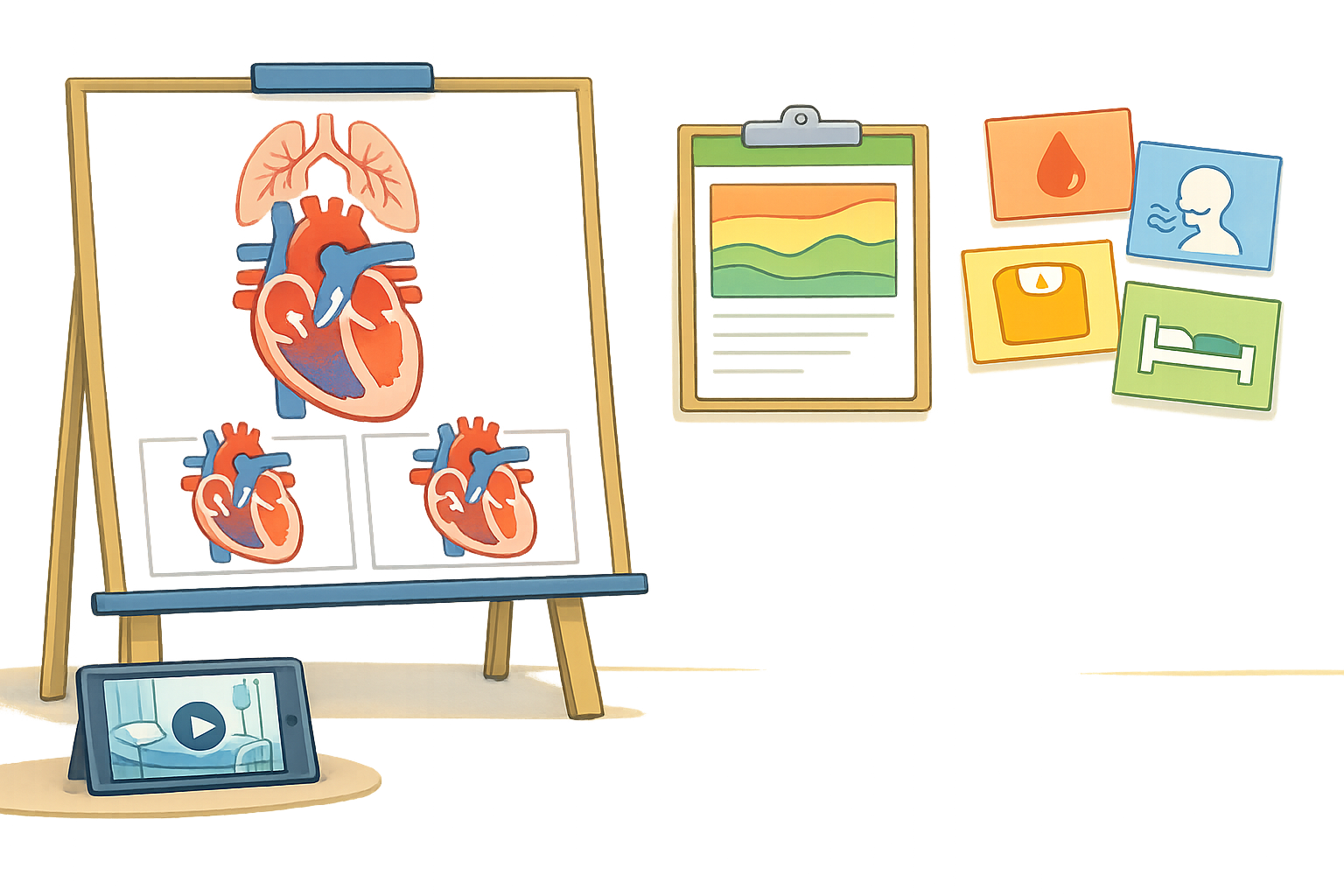
HeartStrong mascot in an open teaching pose for heart failure basics.

What is heart failure?

Heart failure means the heart needs more support to pump or fill well.

It does not mean your heart has stopped. It means your heart is working under strain, and your care team uses symptoms, ejection fraction, and medications to help you feel better and stay out of the hospital.

Why medications matter

Medications are one of the main ways your care team protects your heart.

Some medications lower pressure, some slow the heart, and some help remove extra fluid. Your ejection fraction helps your team decide which combinations are most helpful for you.

Ejection Fraction (EF)

EF is the percent of blood the left side of the heart pumps out with each beat.

Use this as a conversation starter with your team. The number helps guide treatment, but it is only one part of your overall picture.

Normal EF: 50% to 70%

This means the heart is pumping a typical amount of blood with each beat. EF is not 100%—a healthy heart only pumps out part of the blood each time it beats.

HF with preserved EF

Heart failure can still happen when ejection fraction is normal. Your heart may be stiff or not fill the way it should.

HF with Reduced EF: Under 50%

When EF is reduced, your team may recommend specific medication classes to help protect your heart over time.

Symptom Zones

Use your booklet symptom tracker to notice changes early.

Recognize when things feel different and know when to call your care team or get urgent help.

Green: Keep going

  • No new or worse shortness of breath
  • Weight is stable
  • No new swelling in feet or ankles
  • Physical activity feels close to normal

Action: Keep taking medications as directed and continue your daily routine.

Yellow: Caution

  • Weight gain of 3 pounds in a day or 5 pounds in a week
  • Trouble sleeping or needing more pillows
  • Shortness of breath with activity
  • New dizziness or lightheadedness

Action: Message or call your care team today.

Red: Alert

  • Fainting or passing out
  • New chest pain or chest pressure
  • Shortness of breath at rest
  • New or severe dizziness, confusion, or sudden mental health distress

Action: Call 911 or go to the emergency room immediately.

Mental health matters

It's common to feel stressed, anxious, or down with heart failure. Talk to your healthcare team if you're experiencing these feelings.

Video learning

Prefer to learn by watching?

These videos explain what heart failure is, how to manage it, and what symptoms to watch for.

Heart Failure Medications

Learn about heart failure medicines, why they matter, and how the core therapy groups support the heart.

Introduction to Heart Failure

A plain-language explanation of what heart failure is, why it is serious, and the symptoms that usually show up first.

To make the video bigger, tap the square in the lower-right corner of the video. You can also open it on YouTube.

Open larger on YouTube

Importance of Heart Meds

An overview of guideline-directed medical therapy and why the four core medication groups help people feel better, live longer, and avoid hospitalization.

To make the video bigger, tap the square in the lower-right corner of the video. You can also open it on YouTube.

Open larger on YouTube

Vitals and Lifestyle Videos

Learn how daily monitoring and day-to-day habits support heart failure care between visits.

Weight Monitoring

Explains why sudden weight gain can signal fluid retention and when to call your care team about changes.

To make the video bigger, tap the square in the lower-right corner of the video. You can also open it on YouTube.

Open larger on YouTube

Diet and Exercise

Explains how lower-salt eating and gradual activity can support breathing, energy, and heart strength.

To make the video bigger, tap the square in the lower-right corner of the video. You can also open it on YouTube.

Open larger on YouTube

Symptom Videos

Learn about symptom tracking, health status surveys, and what dizziness can mean in heart failure.

Health Status

Explains the KCCQ-12 symptom survey and how repeated check-ins help your care team understand how you are doing over time.

To make the video bigger, tap the square in the lower-right corner of the video. You can also open it on YouTube.

Open larger on YouTube

Dizziness

Explains common reasons dizziness happens in heart failure and offers tips that can make it easier to manage safely.

To make the video bigger, tap the square in the lower-right corner of the video. You can also open it on YouTube.

Open larger on YouTube